
The Indian government has confirmed there will be no rollback of the 0.4 per cent Merchant Discount Rate (MDR) charges on Unified Payments Interface (UPI) transactions exceeding Rs 2,000, effective from October 15. Despite opposition, officials state the decision aims to make the UPI ecosystem self-sustainable and secure, with charges applying only to merchant payments, not person-to-person transactions.

The Retailers Association of India (RAI) has voiced concerns that the government's new 0.4 per cent Merchant Discount Rate (MDR) on UPI transactions above Rs 2,000 could reverse the progress of digital payment adoption among small retailers. This fee, effective October 15, places the burden on merchants operating on thin margins, potentially pushing them back to cash transactions and undermining the government's formalisation agenda, especially ahead of the festive season.

The Swadeshi Jagran Manch (SJM) is advocating for the termination of the moratorium on customs duties for electronically transmitted digital products, arguing that it hinders self-reliance, causes revenue losses, and restricts India's ability to tax emerging technologies like AI.

Domestic rating agency ICRA on Monday said Indian companies are likely to clock 7-8 per cent revenue growth during the March quarter of the current fiscal year, led by revival in rural demand and uptick in government spending. ICRA expects the private capital expenditure (capex) cycle to remain measured in view of the uncertainties around geopolitical developments and relatively subdued outlook on merchandise exports from India.

New Delhi will substantially reduce tariffs on industrial and agricultural goods while continuing to protect sensitive sectors. Tariffs on some agricultural products that are not traditionally considered sensitive will be brought down to zero, while in the case of relatively sensitive items, duties will be reduced in a graded manner and quotas will be imposed.

The Indian government has expressed its disagreement with the IMF staff's 'baseline' assumption that the 50 per cent US tariffs on its goods exports 'would remain in place indefinitely', based on which the staff pegged the country's GDP growth at 6.6 per cent this year, and pared its 2026-27 projection by 20 basis points to 6.2 per cent.

Companies making larger profits are now paying a lower rate of effective tax because of concessions
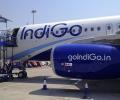
The country's largest airline IndiGo on Friday saw its profit after tax slide 18.3 per cent to Rs 2,448.8 crore in the three months ended December 2024 due to foreign exchange loss even as revenue jumped on higher capacity and passenger traffic. The carrier, which had a fleet of 437 planes at the end of December, is planning to induct wet leased planes for long range flights and expects the number of grounded aircraft to come down to 40s by the start of next financial year from the current level of 60s.
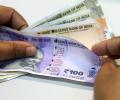
In a statement, the CBDT, which is the apex policy making body for direct tax policies, said it has never asked IRS Association or these officers to prepare such a report and no permission was sought by them before making the report public. 'It is unequivocally stated that CBDT never asked IRS Association or these officers to prepare such a report.
Diversified entity ITC Ltd on Thursday reported a 22.66 per cent rise in consolidated net profit at Rs 5,225.02 crore in the fourth quarter ended March 2023, led by a strong growth momentum across operating segments. The company had posted a net profit of Rs 4,259.68 crore a year ago, ITC Ltd said in a regulatory filing. Its revenue from operations increased 7 per cent to Rs 18,799.18 crore in the period under review against Rs 17,754.02 crore in the year-ago period.
ITC Ltd on Friday reported a 23.09 per cent increase in consolidated net profit at Rs 5,070.09 crore for the third quarter ended December 2022, helped by growth momentum across its operating segments. The diversified company had posted a net profit of Rs 4,118.80 crore during the October-December quarter of the previous fiscal, ITC said in a regulatory filing. Its revenue from operations was up 3.56 per cent to Rs 19,020.65 crore during the quarter under review, as against Rs 18,365.80 crore in the corresponding period of the previous fiscal.

A survey, with over 3,700 respondents across digital platforms, found that transparent taxation has been one of the most significant initiatives of the government followed by the production-linked incentives (PLI) scheme, equalisation levy and new labour codes.

Banking and telecom will see the highest impact of this transition.

As India emerges from the COVID-19 crisis, the ninth budget under the Modi government, including an interim one, is widely expected to focus on boosting spending on job creation and rural development, generous allocations for development schemes, putting more money in the hands of the average taxpayer and easing rules to attract foreign investments.

The Budget is remarkably coherent.

India's economic image is not affected due to Adani Group's recent decision to pull out Rs 20,000 crore FPO (follow-on public offers) amid allegations of financial wrongdoings, Finance Minister Nirmala Sitharaman said on Saturday.

To begin, the Budget has no doubt attempted to address uncertainty.

The maker of Pulsar and Discover reported a net profit of Rs 1,138.20 crore in the second quarter, compared to Rs 1,402.42 crore a year ago.

The government should have mentioned clearly the specific structural reforms that were responsible for the deviation from the fiscal deficit target by half a percentage point, says A K Bhattacharya.

Indian economy about to take-off

India Inc is encouraged by a determined Budget.

The government should now focus on governance and monitoring the supply side to manage inflation, says M V Subramanian.

ONGC's chairman and managing director Sudhir Vasudeva tells Business Standard that any price for natural gas that is more than $4.2 a unit is good for the company.
